
This post is also available in:
This time of year has come again. ChinaJoy, China’s largest gaming exhibition, will be held from July 31 to August 3.
ChinaJoy has long led China’s gaming scene, but as large-scale global events change in various ways after the COVID-19 pandemic, it is also in the process of exploring new paths.
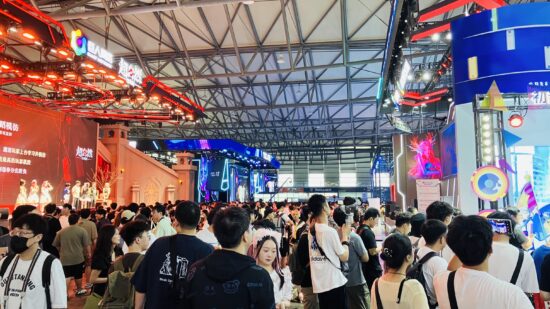
Previously, it was essentially a trade fair for major Chinese gaming companies, with major players such as Tencent, NetEase, Giant, and Perfect World actively participating, in line with the growth of China’s economy and the expansion of the Chinese gaming market.
For stakeholders from overseas countries, including Japan, ChinaJoy was established as a very convenient business platform that allowed a comprehensive overview of the rapidly growing Chinese game market and the growing Chinese game companies within it.
We threw ourselves into the excitement to get the latest updates on major projects and major titles that were also a hit for game fans.
ChinaJoy, held in midsummer, was called the “Sauna Joy” due to its physical heat, but looking back now, the heat of the Chinese gaming market may have also contributed to the emergence of this nickname.
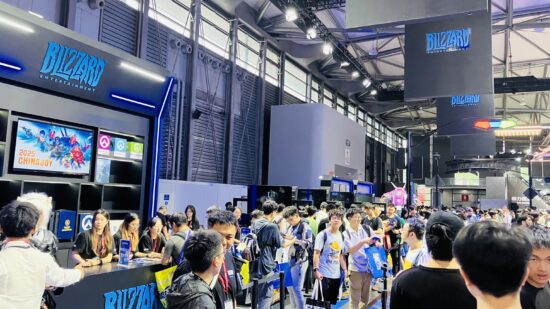
Now, as major global events have shrunk and shifted to online due to the COVID-19 pandemic, and with China’s economic downturn and other factors, ChinaJoy has been seeking a new position in recent years.
In the mature Chinese gaming market, a mere large-scale exhibition is no longer sufficient. With the rise of high-quality gaming events in Shanghai, such as BiliBiliWorld and WePlay, there are more events for gaming fans to choose from, further strengthening ChinaJoy’s need to establish a new position.
Last year and the year before, ChinaJoy focused heavily on attracting indie games. This is similar to large game exhibitions in neighboring countries such as Tokyo Game Show (Japan), Taipei Game Show (Taiwan), and G-STAR (Korea), but indie also means small, The style of gathering small studios seems to have been a time-consuming transformation given ChinaJoy’s massive capacity. ChinaJoy is likely at a stage where we continue to support indie games and focus on our next focus.
Now, in such circumstances, what will happen this year is that it seems we’ve finally formed a clear axis for the first time in a while.
That is AI.
AI is a major hot topic not only in games, but in many ways, games and AI are highly compatible, and the way the gaming industry interacts with AI is one of the main concerns for many industry professionals and game fans.
China is the second largest AI nation after the United States. In today’s recession-prone Chinese gaming industry, many talents have transferred to AI, and both talent and capital in China’s IT sector are undoubtedly shifting to AI. As a result, technology is flowing back into the gaming industry with know-how transplanted from the gaming industry. This is the current relationship between the Chinese gaming industry and AI.
ChinaJoy is also working to capture this major transformation, and according to a recent press conference, ChinaJoy’s 2026 theme is clearly “Level Up with AI.”
In China, which boasts several globally leading AI platforms, the leap forward in AI presents a definite opportunity for the gaming industry.
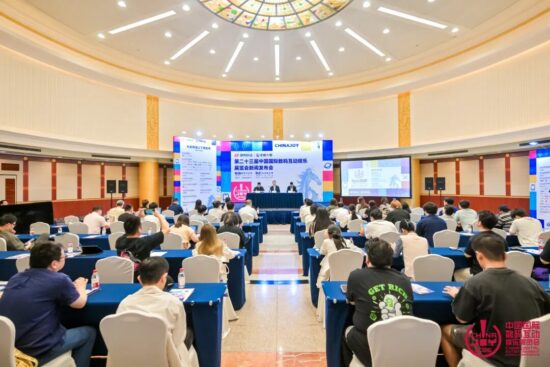
On the other hand, there is much discussion about how AI may intrude into game content, such as how copyright handling varies by country and interpretations of AI growth methods such as training and distillation.
It seems that ChinaJoy chose to center its event management around AI to lead such discussions, which can certainly be understood as a necessary move at the following timing.
China boasts major successes such as “Genshin Impact,” “Black Myth Wukong,” and in indie games like “Sultan’s Game,” but how do game development sites face AI, and how do game fans perceive AI in content creation?
As the author, I think the highlight of this year’s ChinaJoy is “AI.”
SQOOL will participate in ChinaJoy again this year and bring you a glimpse of the on-site scene.


💬 コメント Comments